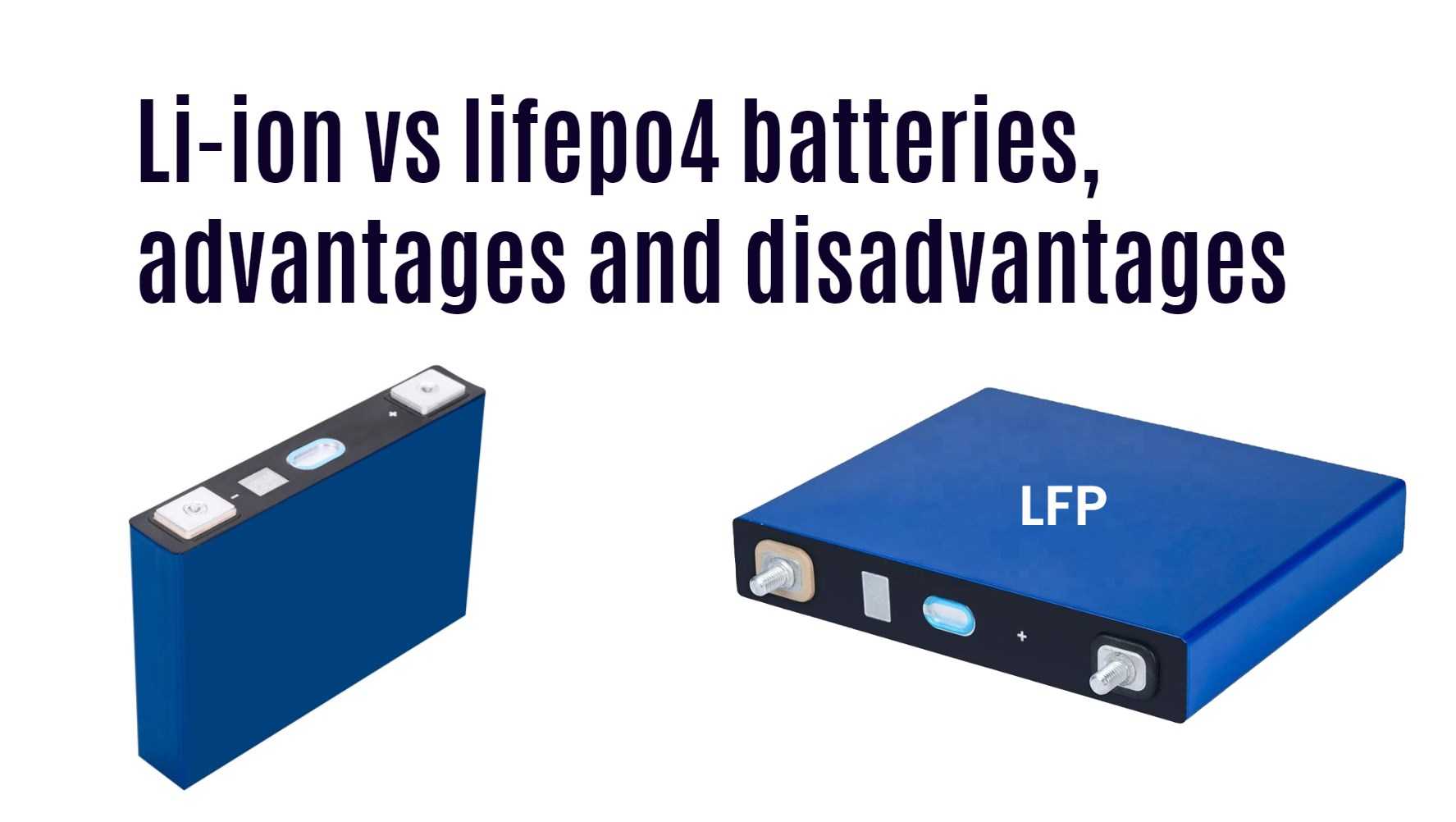
When it comes to choosing a battery for your energy storage needs, two popular options are Lithium-ion (Li-ion) and Lithium Iron Phosphate (LiFePO4 or LFP) batteries. Both types of batteries have their advantages and disadvantages, and the choice between them depends on your specific requirements.

Advantages of Lithium-Ion Batteries:
- Higher Energy Density: Lithium-ion batteries have a higher energy density, which means they can store more energy per unit volume or weight. This makes them ideal for use in portable devices like smartphones and laptops.
- Lighter Weight: Lithium-ion batteries are lighter in weight than LiFePO4 batteries, making them more suitable for use in applications where weight is a concern.
- Faster Charging: Lithium-ion batteries can charge faster than LiFePO4 batteries, which is a significant advantage for applications that require frequent charging.
Disadvantages of Lithium-Ion Batteries:
- Safety Concerns: Lithium-ion batteries can be prone to overheating and even catching fire or exploding if they are not manufactured or used correctly.
- Shorter Lifespan: Lithium-ion batteries have a shorter lifespan than LiFePO4 batteries, which means they will need to be replaced more often.
- Higher Cost: Lithium-ion batteries are generally more expensive than LiFePO4 batteries.
Advantages of LiFePO4 Batteries:
- Longer Lifespan: LiFePO4 batteries have a longer lifespan than lithium-ion batteries. They can last up to 10 years or more, depending on the usage and maintenance.
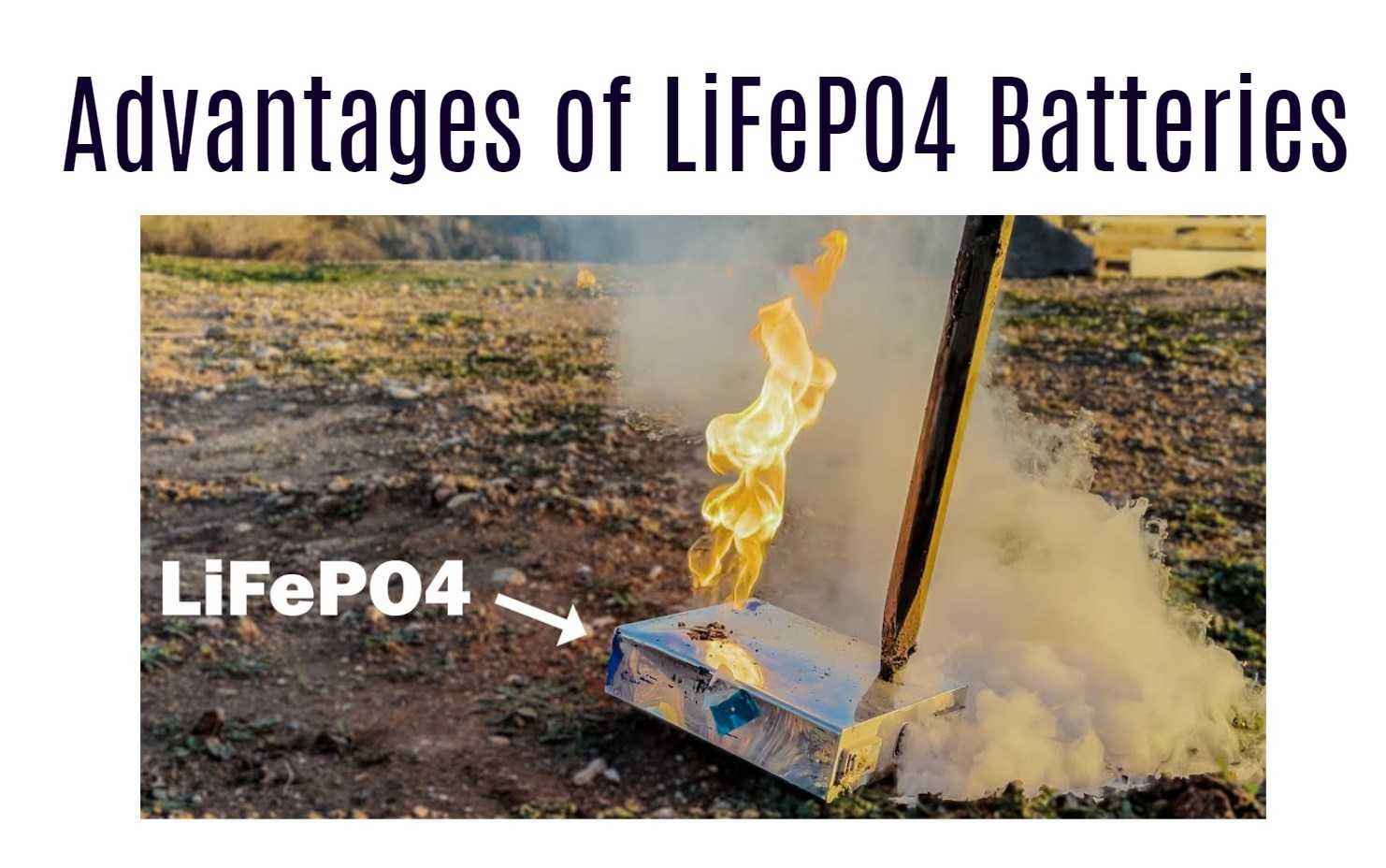
- Higher Safety: LiFePO4 batteries are less prone to overheating and are considered safer than lithium-ion batteries.
- Better Performance in High Temperatures: LiFePO4 batteries can perform better than lithium-ion batteries in high temperatures.
Disadvantages of LiFePO4 Batteries:
- Lower Energy Density: LiFePO4 batteries have a lower energy density than lithium-ion batteries, which means they cannot store as much energy per unit volume or weight.
- Heavier Weight: LiFePO4 batteries are heavier in weight than lithium-ion batteries, which can be a disadvantage in portable applications.
- Slower Charging: LiFePO4 batteries can take longer to charge than lithium-ion batteries, which may be a disadvantage in applications that require frequent charging.
Continue exploring: Use the Lithium vs Alkaline, AGM & Lead-Acid Batteries guide for the related decision process, evidence, and practical guidance.